A Judicial Dilemma: Separation of Powers on Trial in Kenya
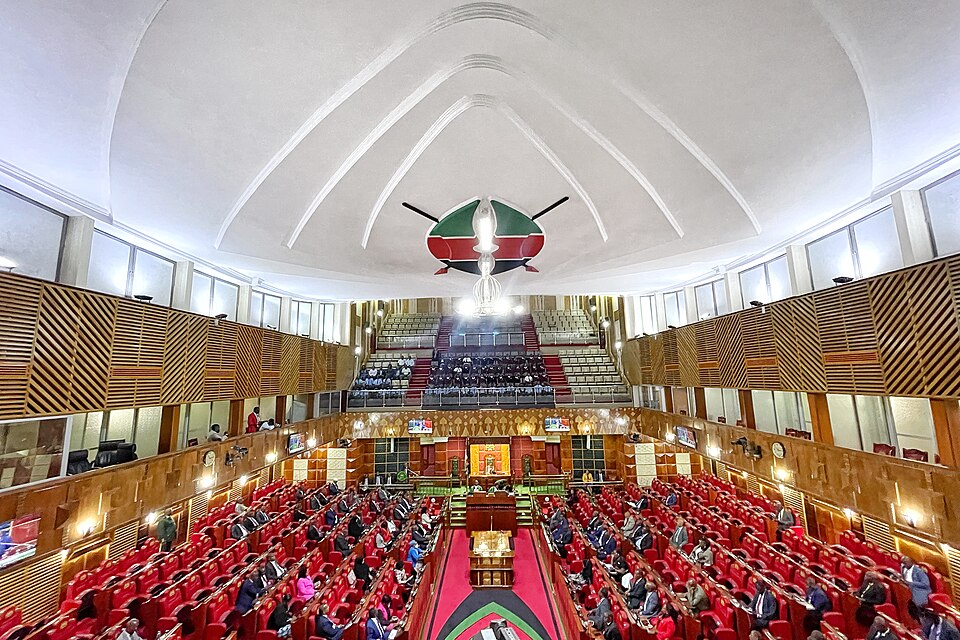
In May 2026, a high-stakes drama unfolded in the High Court of Kenya before a three-judge bench. What began as a highly publicized falling out at the executive level between President William Ruto and his Deputy Rigathi Gachagua in 2024, made its way into the legislature through impeachment proceedings, and had now ended up at the Judiciary for determination. Central to this was the impeachment of Gachagua by Parliament. In a long-awaited judgement delivered in June 2026, the courts attempted to navigate what is essentially a political dispute, while upholding constitutional rights. How does this judicial intervention affect parliamentary politics moving forward?
In August 2022, William Ruto won the presidential election, alongside his running mate, Rigathi Gachagua. While the two ran on a “hustler platform” – a bottom-up economic agenda aimed at improving the welfare of Kenya’s low-income earners, the ethnic arithmetic that is a mainstay of Kenya’s politics was still part of the equation. Gachagua who is from Central Kenya, delivered considerable votes from his home region, which contributed immensely to the two winning the election. However, less than two years into their term, cracks began to show in their relationship, Matters came to a head during the June 2024 Finance Bill protests, led by young Kenyans protesting punitive tax proposals and a political class which appeared insensitive to the struggles of the common man.
At the time, Ruto was facing the toughest test yet in his presidency. Buffeted on one side by protesting youth and on the other with demands from the International Monetary Fund (IMF), the government pushed the bill through the national assembly despite widespread public opposition to it. What followed were days of chaos. Protests intensified and a heavy-handed police response resulted in several protesters being killed, injured or disappeared. As pressure increased for the President to leave office, he rescinded the Finance Bill and fired his entire cabinet leaving only Gachagua and Chief Cabinet Secretary, Musalia Mudavadi in office. Amid these events, Gachagua held a press conference in which he openly criticised the national intelligence service, accusing the agency of misadvising the President.
In the subsequent weeks, as calm returned, the President reconstituted his cabinet, including members from then opposition leader Raila Odinga’s faction, in what he termed the broad-based government. With Gachagua increasingly isolated, it was obvious for all to see that relations between him and the President had irretrievably broken down. Efforts appeared to be underway to resolve the impasse.
The Impeachment process
The solution arrived in the form of an impeachment motion in October 2024 which was put forward to the National Assembly by Member of Parliament Mwengi Mutuse. In the motion, eleven grounds of impeachment were canvassed, which included allegations of sowing ethnic division, inciting anti-government protests, insubordination of the President and abuse of office. The motion was passed by the National Assembly garnering the required two-thirds majority vote, which set the stage for impeachment proceedings to be held at the Senate. Faced with the proceedings, Gachagua filed multiple cases in court to stop the process, first, before the impeachment motion was filed before the National Assembly, and again before impeachment proceedings began at the Senate, but his requests were denied. There followed a swift Senate hearing, in which a few witnesses were called to give evidence against Gachagua. On the second day of the proceedings, Gachagua was taken ill and admitted to hospital right before he was expected to take the stand in his defence. A request for adjournment was dismissed, with proceedings continuing in Gachagua’s absence. In October 2024, Gachagua was impeached by the Senate who found him guilty of five grounds in the impeachment motion and absolved him of six.
Constitutional Petition at the High Court
Following his impeachment, Gachagua immediately filed a petition in the High Court of Kenya where he argued that his constitutional rights had been violated, and that the impeachment process had been deeply flawed. Several other cases were filed by interested parties in various other courts, which were eventually consolidated into one. The case came up for hearing in May 2026, before the High Court. A key issue that Gachagua and several petitioners raised touched on the question of separation of powers, as he was essentially asking the courts to review an act done by the legislature. The respondents, who included the Senate and the Attorney General, perceived that judicial restraint was required in the case, as certain issues are inherently political and are not amenable to review by the judiciary.
While the former Deputy President had made it clear that he did not want to be reinstated to his former position, he asked the Court to make a finding that his rights had been violated, as it was clear from the beginning that his removal from office was a foregone conclusion – an exercise in malicious compliance, where he was led through the motions of justice.
In a monumental judgement delivered on 8 June 2026, the court found that the petitioner’s rights to a fair hearing had been violated, but nonetheless, upheld the impeachment. They made a further declaration that the Senate ought to compensate him a sum of Kenya Shillings 50 million (about 335,000 Euros) for the violation of his fair trial rights, and that a law ought to be passed by Parliament that would guide the impeachment process of the Deputy President in future.
Nevertheless, many commentators have questioned the court’s decision to uphold the impeachment, warning that it creates inconsistencies in the application of the law, particularly where a fundamental constitutional right, such as due process, has been found to have been violated. The judges did acknowledge this dilemma in their decision, noting that quashing the impeachment would lead to a situation where two deputy presidents technically hold office, hence their decision to offer compensation as a remedy. However, this leaves the uncomfortable question of how political manoeuvring may work to defeat a petitioner’s rights. If a violation is established, but the President has since appointed a replacement, does this effectively extinguish a remedy that ought otherwise to have been granted?
Importance of the Gachagua Case
While there have been impeachment proceedings at the county government level, the Gachagua case, marks the first time in Kenya’s history that a deputy president has faced impeachment. Impeachment was a process introduced to Kenya through the 2010 Constitution. It sought to do away with the hitherto practice, where government officials served “at the pleasure of the president” and were hired and fired at will. Prior to 2010, separation of powers in Kenya was quite weak. Indicator trends from the BTI,show the score on separation of powers improving from 5 out of 10 in 2010, to 7 in 2014 (BTI 2026: 6/10), as the powers of the executive were clipped, while that of the legislature and judiciary were strengthened. However, under the Ruto administration, the trend of resurging executive aggrandizement has continued by exerting significant influence over parliamentary affairs.
The judgement reinforces separation of powers as a central tenet of Kenya’s constitutional order. The court rejected the state’s “political question doctrine” defence and asserted their constitutional oversight role of judicial review, making it clear that other arms of government cannot become a law unto themselves. While they accepted that impeachment is principally a parliamentary function under Article 145 and 150 of Kenya’s constitution, they cautioned that “separation of powers does not mean separation from the constitution.” They emphasized that the constitution does not establish a rigid wall of separation between the arms of government, but rather creates a system of checks and balances, within which no arm is superior to the other. This doctrine therefore calls for mutual respect among institutions rather than exclusion, and Parliament cannot invoke it as a shield from constitutional accountability.
On the verge of Political Anarchy
The Gachagua case has thrust the Judiciary into the heart of what are essentially political disputes. The courts are being tasked with navigating the constitutional and political minefield that opens when impeachment processes are seemingly used to settle political disagreements. There is no denying that the courts have been placed in an extremely difficult position, trying to on the one hand avert political anarchy, and on the other, remain true to constitutional values.
With the recent filing of a notice of appeal by Gachagua, the legal battle is far from over with the case moving on to the Court of Appeal and possibly even the Supreme Court. Beyond the legal quagmire, the case also carries great political significance as Kenya prepares for the August 2027 polls. Gachagua has publicly stated his desire to challenge President Ruto in the next election, but the impeachment and its interpretation stand in the way. Under the constitution, a person is not eligible to hold or stand for office, if they are found to have abused public office, or contravened ethics and integrity rules. At the same time, the law provides that a person will not be disqualified, unless all possibility of appeal or review of the decision has been exhausted.
Notwithstanding the legal battle ahead, the impeachment has produced consequences that go beyond what its initiators intended. Rather than fading into political obscurity, Gachagua’s standing has in fact risen. A sense of unfairness and double standards at his treatment has translated into sympathy, especially within his ethnic community. In the last few months, his new political party has attracted several defectors from President Ruto’s camp and has arguably become the strongest political force in Central Kenya.
Conclusion
In finding that Gachagua’s right to a fair hearing at the Senate was violated, yet refusing to quash the impeachment, proponents of the judgement argue that the courts have chosen pragmatism, while critics say they have set a precedent for flawed political processes to be compensated with damages. The Court of Appeal will now be tasked with untangling this dispute. If it chooses to uphold the impeachment, it will vindicate President Ruto’s camp, but as noted above, this may have a limited effect on Gachagua’s ambitions, as he continues to position himself as a kingmaker or possible king in opposition politics.
If the court reverses the impeachment, it would be a truly seismic decision that would open a pandora’s box less than a year to the 2027 election. An outcome the courts may opt to avoid. In such a scenario, the sticky question of whether two deputy presidents will be deemed to be in office, or if one is the true holder of the post will need to be resolved, trapping the country in legal limbo.
As the case proceeds to the appeal stage, it presents an opportunity for the Judiciary to establish authoritative precedent on these thorny issues.